


ISO-NE establishes forecast framework for data centers, other ‘large loads’

Data centers and other “large loads” are rapidly increasing demand for electricity outside New England, presenting challenges for grid operators and others in the industry.
New England itself has not experienced similar growth so far, and only a small amount is expected in the coming decade. Nonetheless, the ISO’s innovative team of demand forecasters is proactively laying the groundwork for assessing the impact of future large loads.
“There’s a lot of work going on to get up to speed in this domain, and that’s going to continue as the forecast evolves,” said Victoria Rojo, ISO New England’s Load Forecasting supervisor.
The ISO’s large load forecast makes its debut in the 2026-2035 Forecast Report of Capacity, Energy Loads, and Transmission (CELT Report), published May 1. A foundational resource for system planning and reliability studies, the CELT Report includes long-term projections for demand growth informed by the large load forecast and five other forecast components.

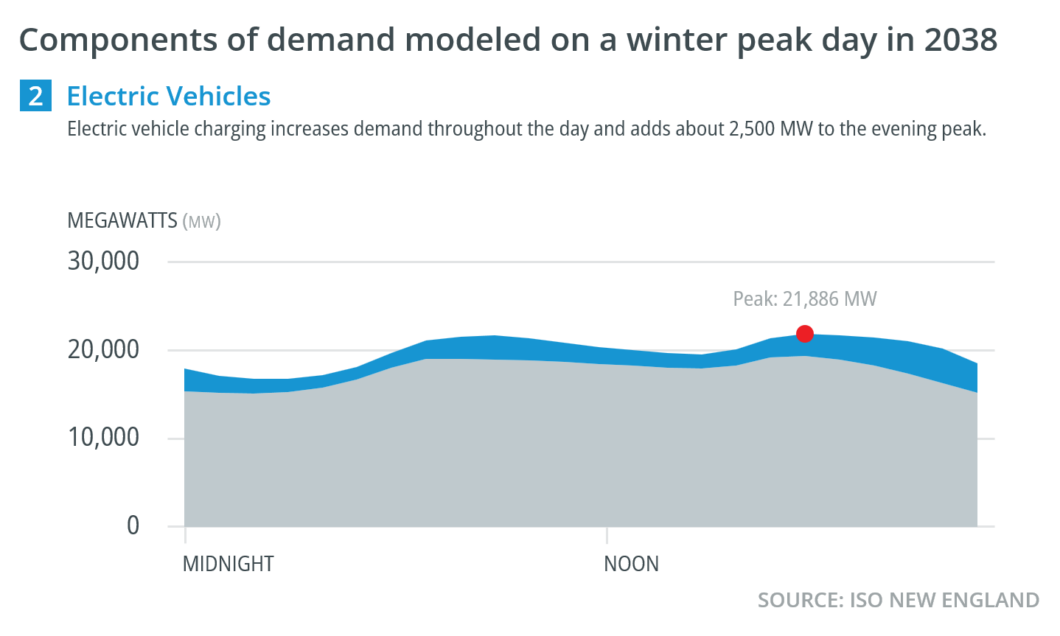
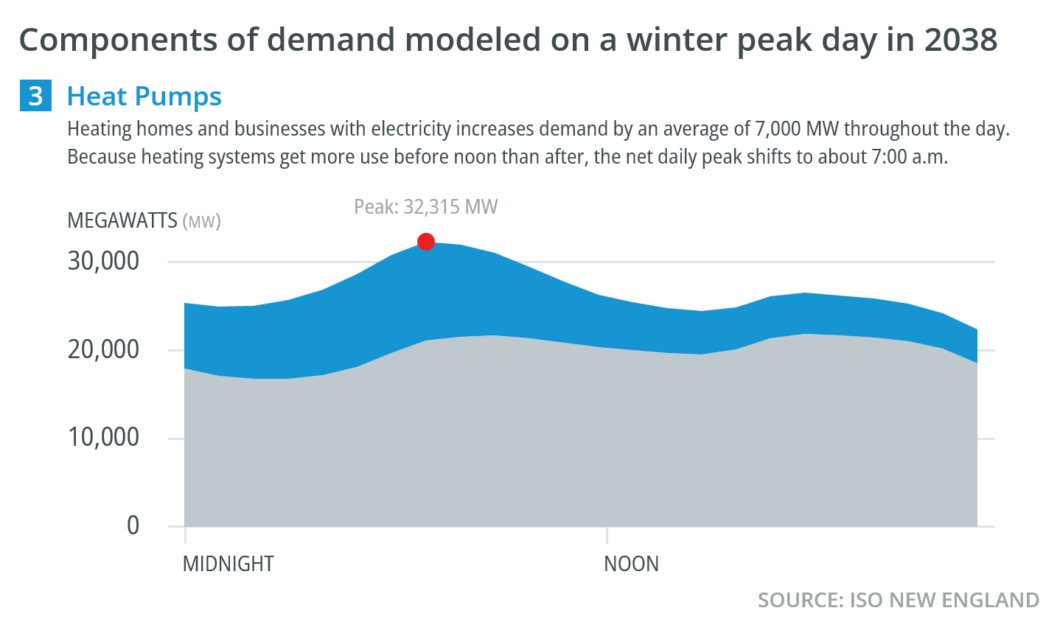


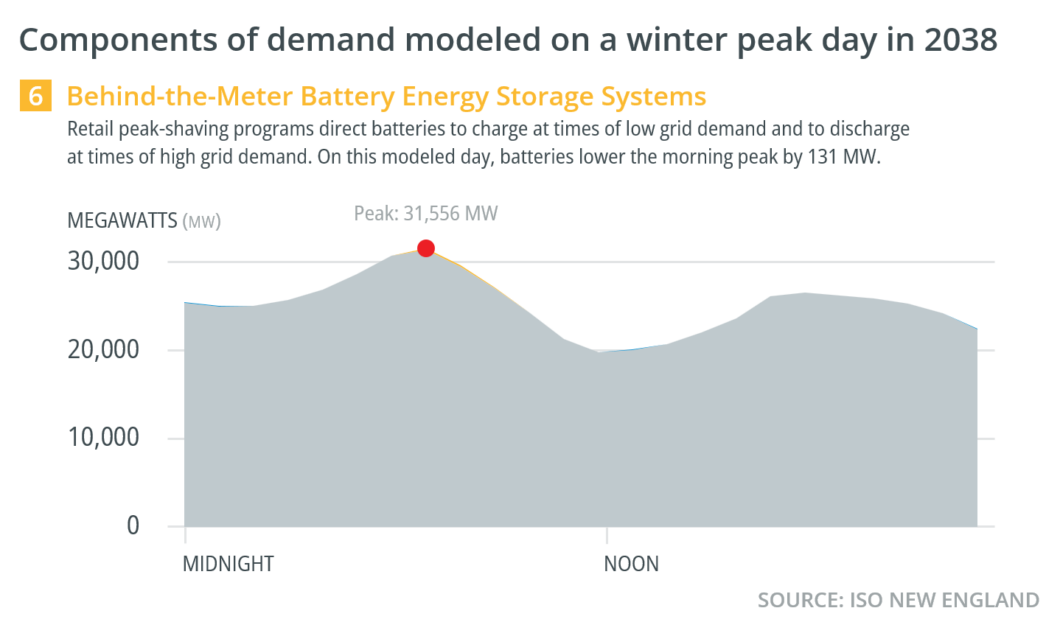
Large loads may include data centers, crypto mining facilities, industrial agriculture, and other large sources of demand connecting to a localized point on the power system.
In recent months, the ISO has been surveying transmission owners to find out about large loads potentially coming to the region. The surveys aim to identify not only the types of proposals and their energy needs, but also to determine the likelihood they will be built. Because some proposals may be speculative, the ISO considers whether a proposal has cleared a series of development hurdles to determine what impacts it may have on the bulk power system. This establishes criteria for “how real a project is,” Rojo said.
Survey data collected from transmission owners suggest New England has just two proposed large load projects in the formal study phase. Together their demand for electricity could reach 285 megawatts (MW) at most.
These projects are not expected to have any effect on overall system demand before the winter of 2027/2028. The ISO’s large load forecast indicates they will contribute around 110 MW to summer and winter peak demand in the 2030s, increasing to about 130 MW in the 2040s. In terms of annual energy use, large loads are expected to consume around 800 gigawatt-hours (GWh) worth of electricity from 2030 to 2035, rising to around 1,000 GWh in the 2040s.
Meanwhile, ISO-NE is taking several steps to deepen its understanding of large loads. It’s evaluating third-party data sources that could inform future forecasts. The ISO is learning from its counterparts in other parts of the country that have already seen significant growth in large loads. And it’s participating in large load task forces and working groups organized by the North American Electric Reliability Corporation (NERC), the Eastern Interconnection Planning Collaborative (EIPC), and the Electric Power Research Institute (EPRI).
More about the 2026 CELT Report:
- Categories
- Publications
- Tags
- CELT