
Explainer: Why does New England have wholesale electricity markets?
The markets allow the power system to operate reliably and cost-effectively while also driving investment.
Read More


Add quotation marks to find an exact phrase (e.g., “offshore wind”).
The markets allow the power system to operate reliably and cost-effectively while also driving investment.
Read More
Asset condition projects are undertaken by transmission owners to replace or reconstruct old or obsolete facilities.
Read More
A virtual attendance option is also available for the Dec. 2 event.
Read More
The plan details high-priority initiatives for innovating, securing, and advancing a reliable, cost-effective power system.
Read More
The NX Application hosts generator and transmission data that is used to model the power system and support reliability.
Read More
GIS is an emissions reporting and tracking tool that monitors environmental attributes of generated electricity.
Read More
The DA A/S enhancements were developed in response to operational experience, market observations, and stakeholder feedback.
Read More
A video recording and summary of the Sept. 24 meeting in Portland, Maine, are available online.
Read More
New training resources provide information on ISO New England’s cluster study interconnection process and support use of the GridInterConnect for …
Read More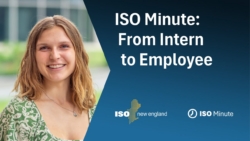
Emily Laput shares how her internship helped shape her career and ultimately brought her back to ISO New England.
Read More
Wholesale prices were up in both the day-ahead and the real-time markets in August.
Read More