


Winter 2025/2026 recap: Grid stays reliable during prolonged cold

Extensive preparation and collaboration helped keep New England’s power grid reliable throughout its most challenging winter in nearly a decade.
During an outbreak of arctic air from Jan. 23 to Feb. 10, temperatures in the region averaged about 15 degrees Fahrenheit (°F) — 11°F below normal.
Demand for electricity was elevated throughout the 19-day period, both in terms of peak demand and overall consumption. New Englanders consumed about 7,669 gigawatt-hours of electricity during this time. Peak demand for the winter occurred early in the event, in the hour between 1:00 and 2:00 p.m. on Jan. 25. At 20,182 megawatts, the peak was slightly above the ISO’s pre-winter forecast for normal conditions.

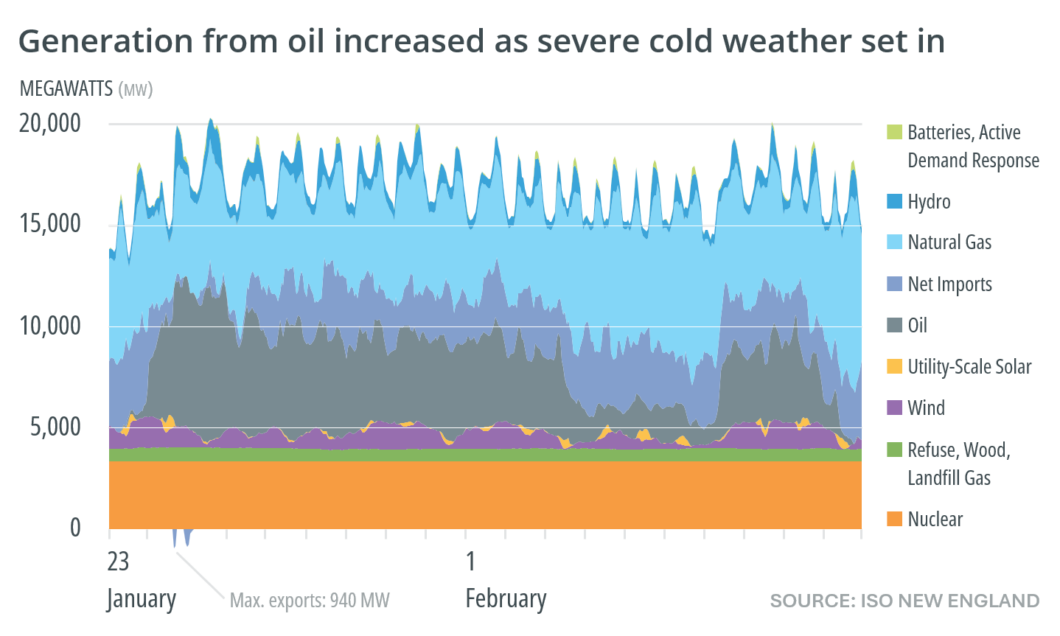
New England typically gets about half its electricity from natural-gas-fired generators. But the region’s natural gas pipeline system is contracted primarily to serve home and business heating needs first. Demand on the gas system was elevated throughout the event. High demand, coupled with limited capacity to transport gas into New England, prompted high prices. As a result, many generators turned to oil as a more economical alternative.
Meanwhile, heavy snowfall from Winter Storm Fern on Jan. 25 affected delivery logistics for fuel oil and related products up and down the East Coast, creating bottlenecks as generators across the Northeast competed for fuel.
Neighboring regions experienced extreme cold and its related effects at the same time, limiting the availability of electricity imports into New England. Imports averaged about 2,400 megawatts per hour over the 19 days.
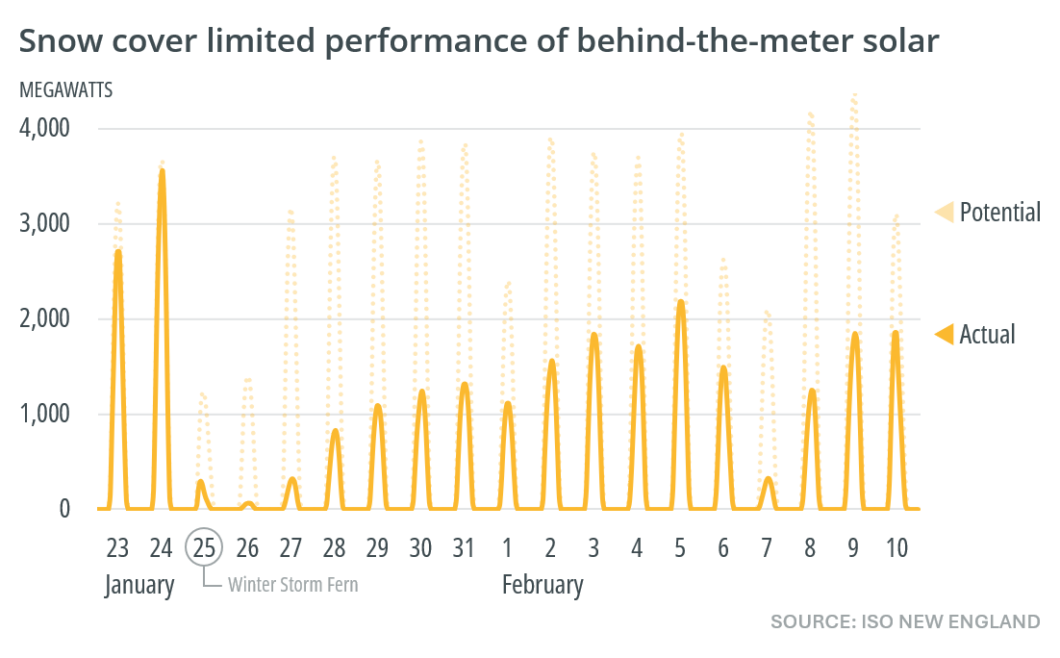
Winter Storm Fern also had a major impact on solar resources. Persistent sub-freezing temperatures meant many solar panels remained covered by snow until early February. Behind-the-meter photovoltaics (BTM PV) can significantly reduce demand for grid electricity when they’re free of snow and the sun is shining. But during the cold snap, BTM PV produced only 41% of its potential, based on daily forecasts assuming no snow but factoring in cloud cover.
The ISO used tools developed following another colder-than-usual winter in 2017/2018, and leveraged strong government and energy industry relationships, to facilitate reliable operations this season.
One of those tools is the 21-Day Energy Assessment Forecast and Report, which the ISO typically publishes on a weekly basis during the winter. During the arctic outbreak, it published the report daily. This involves energy analysts at the ISO gathering information via generator surveys and performing energy assessments.
Daily reporting provided the region with transparent, actionable information on changing weather conditions and fuel availability. Participants in the wholesale markets responded by taking steps to secure fuel for the duration of the cold snap.
In addition to providing valuable information for regional stakeholders, the ISO was in frequent, direct communication with industry and government officials.
To maximize the availability of generation during the cold weather conditions, the ISO requested and received an order from the US Department of Energy (DOE) under Section 202(c) of the Federal Power Act. The order ensured that all available power resources in New England, including those subject to emissions or other permit limitations, would be able to operate when they otherwise might not be able to. The order was in effect from Jan. 25 to Feb. 14.
Under the order, 57 resources, or about 39% of the region’s total winter generating capacity, were granted treatment as “specified resources.” Of that number, 26 resources reported exceeding a specified limit during the period the order was in effect. The specified resources consisted primarily of generators using natural gas, oil, or both.
The ISO recognizes the importance of environmental permit limits and did not make the request lightly. However, the prolonged nature of the cold weather made the order necessary to ensure power system reliability while the power grid was under strain.
Cold winter overall
As a whole, the winter of 2025/2026 was the region’s coldest in 20 years, with the average temperature 3.4°F below normal. Total winter energy demand was the highest in 11 years.
Energy market transactions for December, January, and February totaled about $6 billion — the highest of any winter since the wholesale markets were instituted in 2003.
A second major winter storm, Hernando on Feb. 23, resulted in approximately 350,000 customer outages at the distribution level, but did not affect the reliability of the transmission system coordinated by ISO New England. More detail is available in the ISO’s latest System and Market Operations Report.
- Categories
- Inside ISO New England
- Tags
- system operations, winter